
Daniel Maldini does not run like his father. That is the first thing you notice. Paolo Maldini glided;Daniel accelerates with a kind of urgent, angular energy, as if trying to outpace the shadow of two generations. At 22, he carries a surname that is less a name than a monument. His grandfather Cesare lifted the European Cup as captain in 1963. His father did it five times. Daniel, meanwhile。has spent the last two seasons learning to breathe in smaller stadiums, on loan at Spezia and now at Monza, far from the San Siro’s suffocating embrace.
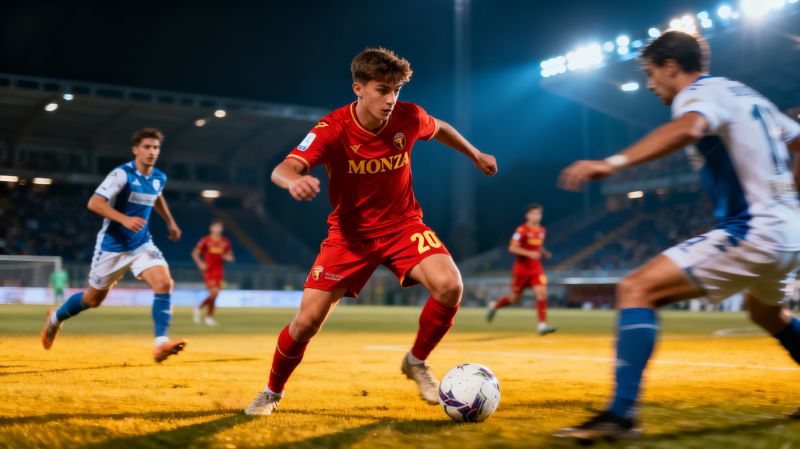
The numbers tell a story of quiet progress. In 2023-24, Daniel Maldini scored four goals and provided two assists in 26 Serie A appearances for Monza—modest figures for a forward, but context matters. He played mostly as a second striker or attacking midfielder, often drifting left. His expected goals per 90 minutes (0.28) ranked respectably among players under 23 in the league. More telling: his progressive carries per 90 (3.1) and fouls drawn (1.8) suggest a player unafraid to run at defenders, to invite contact. That aggression is new. At Milan’s primavera, he was sometimes criticized for drifting out of games. At Monza。coach Raffaele Palladino gave him a simple instruction: “Stop thinking about the name. Start thinking about the ball”There is a specific moment from April 2024 that captures the tension. Monza hosted Napoli. Daniel received the ball on the left touchline。cut inside past two defenders, and curled a shot just wide of the far post. The Monza bench rose;Palladino clapped furiously. But Daniel’s face showed no celebration—only a tight, frustrated frown. He knows that near-misses do not silence the noise. In Italy, the Maldini name opens doors but also invites a harsher scrutiny. Every misplaced pass is dissected as evidence of nepotism;every good game is dismissed as a fluke. “He has to be twice as good to be considered half as good” one Serie A scout told me last season. That is not an exaggeration;it is the baseline.Technically。
Daniel Maldini is a different player from his father. Paolo was a defender of almost surgical discipline—positionally flawless。rarely beaten. Daniel is a creator, a risk-taker. His left foot is his weapon;
his first touch in tight spaces is genuinely excellent. He lacks explosive pace over long distances, but his short-area quickness allows him to find half-yards in the box. What he must still learn is decision-making under pressure. Too often, he holds the ball a beat too long, trying to make the perfect play rather than the simple one. That is a habit of talented young players who grew up being told they were special. Palladino has been working on it—showing him clips, demanding quicker releases. The improvement is visible but gradual.Where does Daniel Maldini go from here?Monza have an option to buy, and Milan retain a buy-back clause. The speculation will continue。but the real question is internal. He needs a season of consistent starts, not cameos. He needs a coach who will tolerate his mistakes without benching him for a month. And he needs to stop being “the Maldini” and start being “Daniel” That transformation does not happen in a press conference or a viral highlight. It happens in the 78th minute of a rainy away game in Lecce, when the legs are heavy and the crowd is hostile, and you still demand the ball. Daniel Maldini has shown flashes of that player. The next two years will decide whether the flashes become a flame—or whether the weight of the name finally becomes too much to carry.